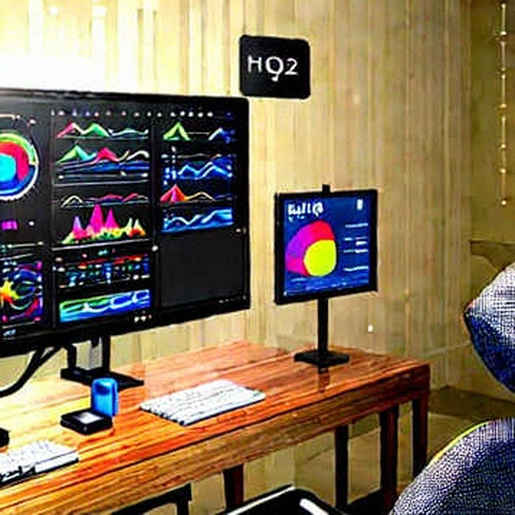
A US precision strike near Shadegan, Iran. One tweet from Crypto Briefing. A prediction market ticker: 54.5% probability of full airspace closure by August 31.
Ledgers don't lie. But people do. The question isn't whether the strike happened. It's whether the market has already priced in the next three moves.
Context: The Global Liquidity Map Just Redrew
Shadegan sits in Khuzestan, Iran's energy spine. A strike there is not a random pinprick. It's a surgical message: the Strait of Hormuz is now a bargaining chip. For a macro watcher, this is not about bodies. It's about barrels. And barrels flow through digital ledgers.
Crypto markets are built on the illusion of decoupling. DeFi, L2s, stablecoins — they all pretend the world's energy supply chain sits outside their nodes. It doesn't. Every transaction on Ethereum burns electricity. Every cross-border settlement relies on physical infrastructure. When oil spikes, everything shifts.
Core: The Prediction Market as a Systemic Stress Test
I've spent years auditing protocols. In 2020, I found an integer overflow in Compound's rate engine before mainnet — a bug that would have drained liquidity pools. That experience taught me one thing: code is law, but only until the macro breaks it.
Now look at the 54.5% number. That's not a weather forecast. It's a price — a collective wager on the probability that Iran and the US enter a state of total airspace denial. In my work on the Terra collapse forensics, I mapped how algorithmic stablecoins fail when external shocks exceed reserve thresholds. Prediction markets are similar: they fail when the underlying narrative breaks.
The core insight: this strike transforms crypto from a speculative asset class into a macro hedge. Investors don't buy Bitcoin because they love orange coins. They buy because they distrust sovereign currencies. The 54.5% figure is the market saying: "We are one escalation away from capital controls." Trust is a liability, not an asset.
But here's the rub — most DeFi protocols are not ready. Oracle feed latency will spike during periods of high volatility. L2 sequencers, still centralized in practice, will become single points of failure if regulatory pressure forces node shutdown. The macro shifts. The chart follows.
Contrarian: The Decoupling Thesis Is Dead — Again
Every cycle, someone argues crypto decouples from traditional risk. They point to Bitcoin rallying while stocks dip. They miss the point.
This strike is not just a risk event. It's a regime change. Energy prices will surge. Inflation will re-accelerate. Central banks will tighten faster. And crypto — which runs on energy, relies on stablecoins pegged to the dollar, and is subject to sanctions regimes — will not escape.
In my 2024 work with FINMA on MiCA implementation, I argued that regulatory clarity is a prerequisite for institutional adoption. What happens when a G7 country strikes Iran? The answer: sanctions expand, compliance costs rise, and the legal grey area for crypto narrows. DeFi's "permissionless" ideal meets the realpolitik of border control.
My 2025 study on StarkNet vs SWIFT showed that ZK-rollups can cut settlement time from days to seconds. But that advantage disappears when the underlying fiat rails freeze. The machine economy I designed in 2026 — a micropayment protocol for AI agents — was built for a world where borders are digital. But the strike reminds us: borders are still physical, and money is still state-backed.
The contrarian view: the market is underpricing the likelihood of a full-scale energy shock. 54.5% means the probability is just above coin flip. In my experience, markets systematically overestimate the probability of status quo and underestimate tail events. The Terra death spiral was a tail event until it happened.
Takeaway: Position for the Illiquidity, Not the Rally
The macro shifts. The chart follows. But the chart doesn't tell you when.
For the next 72 hours, watch the prediction market ticker. If it crosses 70%, begin hedging. Not because you know something, but because the market's collective machine — the aggregate of a million autonomous agents and human gamblers — is saying something real.
Crypto will survive this. It always does. But the next week will reveal which protocols are built for war and which are built for bull runs.
Trust is a liability, not an asset. Especially when the sky closes.