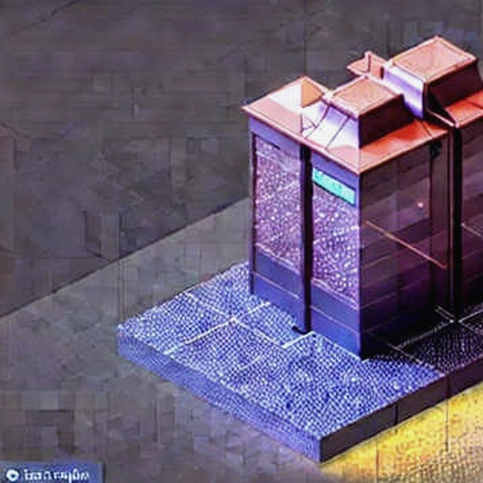
Israel’s Four Acres: A Template for Permanent Military Occupation in the West Bank
The Israeli Defense Forces have seized four acres of Palestinian land in the West Bank for military use until 2028. This is not a headline about a spontaneous security response. It is a carefully measured act of strategic permanentization. The data point is trivial: four acres is roughly the size of two football fields. The signal is massive: Israel is encoding a long-term military footprint into the heart of disputed territory, locking in a presence that outlasts any current ceasefire, election cycle, or peace negotiation.
This is not temporary occupation. It is the physical establishment of a planning horizon. The 2028 expiration date is the most telling technical detail in this entire operation. In cryptographic terms, it is a hard-coded lock time. By explicitly forecasting a four-year horizon, Israel is signaling that its military planning operates beyond the reactive cycles of conflict management. The timeframe implies a deliberate, institutionalized commitment to a permanent military infrastructure. This is not a reaction to a specific threat spike. It is a structural upgrade to the control apparatus in the West Bank.
From a protocol analysis perspective, this mirrors the behavior of a smart contract that locks liquidity for a fixed period. The four acres function as a ‘stake’. The military commitment is the yield. The expiration date provides a veneer of temporariness while the underlying infrastructure is fully hardened. By the time 2028 arrives, the physical presence will be so embedded that any reversal would be economically and politically prohibitive. This is the classic ‘facts on the ground’ strategy, executed with a technocratic precision that observes international norms in form but contradicts them in substance.
The location of these four acres is critical. It is not in a remote, uninhabited area. It is a deliberate insertion of a military asset into a civilian Palestinian zone. This mirrors a zero-day vulnerability insertion into a trusted node. The military outpost acts as a surveillance and control point, essentially rewriting the security architecture of the region by expanding the ‘attacker’s’ range of visibility. The Contrarian angle here is that this is not a security measure. It is a fragility injection. By creating a hardened military node in a populated area, Israel increases the surface area for friction. Any local resistance or protest now has a direct target. The outpost becomes a magnet for attacks, transforming a theoretical threat into a concrete point of escalation. The security control and the conflict trigger become one and the same.
I have spent years auditing protocol designs where a single permissioned key can bring down an entire system. This is the geopolitical equivalent. The four acres are a permissioned key. As long as Israel holds it, it can authorize any action from that point. But that key also becomes the primary target for any adversary. The assumption that this reduces risk is false. It redistributes risk, concentrating it on a single, vulnerable asset. The security posture appears strong, but the attack surface expands.
The parallel to the Houthi threat highlighted in the original report is not coincidental. The same analysis that projects a 2026 attack window for the Houthis also projects a 2028 military hold for the West Bank. This is a timeline mismatch. It reveals a strategic decoupling. Israel is placing a long-term bet on the West Bank while simultaneously projecting a medium-term threat from Yemen. The two time horizons do not align. This creates a dangerous window of vulnerability where resources are stretched between a fixed commitment and an evolving threat.
From an economic security perspective, this action is a direct subsidy to the Defense Industrial Base. The 2028 deadline is a contract. Military infrastructure firms receive guaranteed revenue for four years. The outpost requires surveillance tech, perimeter systems, communication relays, and support logistics. This is a predictable, locked-in revenue stream. It is the equivalent of a protocol burning tokens to increase scarcity. Israel is burning political capital and international goodwill to inflate the value of its military infrastructure. The contrarian question is whether this inflation is sustainable. If the international response escalates to concrete sanctions or a renewed BDS push, the long-term economic cost of maintaining this single point could outweigh its tactical value.
The key signal to monitor is not the land itself. It is the reaction from the Palestinian Authority. If the PA responds with a suspension of security coordination with Israel, the entire West Bank security architecture destabilizes. This four-acre node would then sit in a hostile, ungoverned zone, becoming a liability rather than an asset.
Takeaway: This is not a tactical seizure of land. It is a strategic bet on the permanence of military control in the West Bank, encoded with a 2028 lock time. The question for long-term observers is whether this timeline holds, or whether the expiration becomes a myth. The pattern is clear: temporary measures become permanent. Code does not forgive. History does not either.
Trust no one, verify the proof, sign the block.
You May Like
From ASICs to GPUs: Why Sphere 3D's Pivot Is a Security Nightmare in Disguise
2026-07-11
Explosions in Iran: The Crypto Market's Moment of Truth or Disinformation Trap?
2026-07-14
The SuperGrok Play: How X’s AI Bundle Is Reshaping Crypto’s Liquidity Frontend
2026-07-18
The PBOC’s Floor: A Signal the Crypto Market Is Not Reading Correctly
2026-07-15
The Silent Liquidation: Why Bitcoin's Dip Below $60K Is a Structural Reset, Not a Sell Signal
2026-07-16
Jules Koundé on the Block: Barcelona Fan Token Holders Face a Fork in the Road
2026-07-12
Netflix's Q2 Revenue Miss: A Case Study in Centralized Subscription Fragility – What Crypto Can Learn
2026-07-18
The Memory Chip Selloff: A Hidden Signal for Crypto's Next Infrastructure Narrative
2026-07-18
Trump's World Cup Invitation: A Crypto Market Signal or Just Noise?
2026-07-19
Escalation-as-a-Service: Deconstructing the Trump-Iran Threat Through a Crypto Security Lens
2026-07-16
The Shadow War in the Static: Deconstructing the Iran Strike Rumor Through On-Chain Signals
2026-07-14
The Pentagon's $80.5M AI Shield: A Macro Signal for Crypto-National Security Convergence
2026-07-10
Devcon 8 Tickets Are Not a Trade Signal — Here's Why
2026-07-16